ACL Surgery Recovery for Non-Athletes

Many people think ACL injuries only happen to athletes. This is of course partially because that’s true! And a lot of recovery advice seems targeted to athletes.
However, in reality, ACL tears are not limited to athletes and can also happen during everyday movements, falls, and accidents. A slip on wet steps, a misstep while carrying groceries, or an unexpected fall at home can be enough to damage the ligament. Then there’s other types of accidents, such as motor vehicle accidents which can result in multiple injuries at the same time.
If you look for online support, you’ll often find a variety of forums focused on athletics and return to sport. However, if you are not an athlete and have no plans to return to high-impact sports, your recovery priorities and choices could be different than those in those groups. You may be more focused on simply regaining stability, reducing pain, and getting back to normal daily living; no need for extreme jumping, pivoting and so required.
This guide is written with you in mind.
Understanding Your Goals
For non-athletes, success after ACL surgery is often measured by comfort, confidence in your knee, and the ability to move through daily routines without fear of instability. You do not need elite performance. Yes, it’s great to be in the best shape possible. Still, your goal isn’t high speed carving on skis or protecting from hits playing contact sports. You want a knee that feels dependable when you walk, stand, climb stairs, garden, or work. That’s enough. That focus shapes the entire rehabilitation process, though you’ll still want to go through a reasonable course of physical therapy.
The First Weeks After Surgery
In the early stages, the priorities are simple and generally the same as most others: manage pain, reduce swelling, and protect the healing graft. You will likely be given a brace and crutches. Use them as instructed. They help prevent sudden twisting or buckling that could harm the repair. Ice, elevation, and rest remain important. There’s many other articles on this site for dealing with these isseus. Even though this phase can feel slow, these quiet weeks lay the foundation for everything that follows.
Physical therapy typically starts soon after surgery. At first, exercises are gentle. You may begin with slight bending and straightening of the knee, simple leg raises, and small movements that keep your muscles active. These early exercises prevent stiffness and help you maintain a connection with the leg while your body heals.
Those seeking to return to athletics often try to push most limits as soon as they possibly can. Though good sports rehab is not about recklessly pushing limits early; it is usually structured, criteria-based progression. For athletes though, there might be a much slower ramp; e.g., more stretching over attempts to get back to strength exercises immediately.
Building Strength and Control
As swelling decreases and your range of motion improves, your therapist will guide you into more active work. For non-athletes, the goal is steady progress rather than aggressive training. Most people focus on everyday functions such as standing from a chair, walking without limping, and controlling the knee during slow, deliberate movements.
Expect to work on quadriceps activation since this muscle is often weak after surgery. Strong quads improve knee stability and reduce the feeling that your leg might give way. You will also strengthen your hamstrings, hips, and core. These muscle groups support balanced walking and reduce stress on the knee.
Everyday Activities
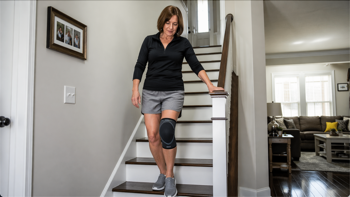
One of the biggest challenges for non-athletes is returning to normal life while still protecting the knee. Simple actions can feel complicated at first. You may need to plan your steps carefully, use handrails on stairs, and avoid quick pivots or uneven surfaces. Many people return to light housework in a few weeks, but heavier chores that involve lifting, kneeling, or carrying may take longer.
Driving is another common concern. Most surgeons approve driving once you can move your leg comfortably and react quickly. If your surgery was on the right knee, it may take extra time. Only return to driving when you feel fully in control.
Managing Fear and Confidence
A surprising part of recovery is the emotional side. You may worry about re-injury or feel frustrated by how slowly the knee improves. These feelings are normal. Consistency matters more than speed. Each week you will notice small improvements that build toward larger changes. Many non-athletes find it helpful to think in terms of function: Can you walk longer than you did last week? Can you stand from a chair without pushing off? These milestones often feel more meaningful than athletic benchmarks.
Long-Term Outlook
Many non-athletes regain substantially improved daily function within a few months, though swelling, stiffness, or discomfort can persist for longer. Full recovery can take up to a year, but you will reach comfortable daily function much sooner. You may continue to feel occasional stiffness or mild discomfort during weather changes or after long days. This is common and usually improves with ongoing light strength work and regular movement.
Your therapist or surgeon may eventually encourage modest activities such as stationary biking, light hiking, or swimming. These are excellent for long-term joint health and mobility. You do not need to return to high-impact sports for your knee to be strong and reliable.
Final Thoughts
Recovering from ACL surgery as a non-athlete is less about performance goals and more about reclaiming daily life. With patience, steady effort, and guidance from your medical team, most people return to the routines that matter to them. Focus on comfort, stability, and confidence. Those are the markers of a successful recovery. At the same time, consider that getting back to normal, whatever that may be for you, likely still has its path through a fair amount of physical therapy and disciplined workouts even if you’re not intending to return to some kind of sport.
In spite of everything said here though, chances are good that to maintain everyday strength, it’s a good idea to maintain a consistent workout regimen to keep all of the structures around your knee healthy and strong.
See Also:
- Anterior Cruciate Ligament (ACL) Injuries – AAOS OrthoInfo
- ACL Injury: Does It Require Surgery? – AAOS OrthoInfo
- Knee Conditioning Program – AAOS OrthoInfo
- The Management of Anterior Cruciate Ligament Injuries (PDF) – AAOS
- Rehab Timeline Expectations – Emory Healthcare ACL Program
- Post Operation Weeks 1–3 Recovery and Follow-Up – Emory Healthcare ACL Program
- ACL Tear Treatment and Reconstruction – Johns Hopkins Medicine
- Anterior Cruciate Ligament (ACL) Injury or Tear – Johns Hopkins Medicine
- ACL Reconstruction Surgery: Procedure and Recovery – Hospital for Special Surgery
- ACL Surgery Recovery: Everything You Need to Know – Hospital for Special Surgery